
The government's fiscal deficit may exceed the target of 4.8 per cent of GDP by 0.50 percentage points in this financial year, and money-guzzling measures like decision to push the Food Security Bill are only expected to complicate the matter.

Stating that India's economic stimulus was not adequate, Banerjee said, the measures did not increase consumption spending of lower income people as the government was not willing to put money in the hands of the low income population.
Indian growth in the rest of this fiscal year and next will be propelled by robust domestic consumption as consumer confidence improves, and by investment, including large increases in government capital expenditure, according to the Asian Development Outlook September 2023. "As slowing exports could foment headwinds for the economy, and erratic rainfall patterns are likely to undermine agricultural output, the growth forecast for FY2023 is revised down marginally to 6.3 per cent," ADB said.

Speaking at industry association CII's annual session, PM Modi said the government has taken tough steps to fight the coronavirus pandemic and has also taken care of the economy. "On the one hand we have to safe the lives of our people and on the other hand we have to stabilise the economy and speed up the economy," he said. "Yes, we will definitely get our growth back," he asserted.
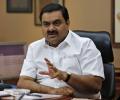
Unlike RIL, the Adani group has not yet brought in any big stakeholders to refinance debt or expand.

Billionaire Gautam Adani's embattled conglomerate said its balance sheet is "very healthy" and is laser focused on continuing business momentum, as it looked to reassure investors to keep faith in the conglomerate despite a share rout triggered by a damning report by a US short-seller. Group CFO Jugeshinder (Robbie) Singh in an earnings call said the group is confident of its internal controls, compliance and corporate governance. Separately, it released a compendium of group companies to highlight that it has adequate cash reserves and has ability to refinance debt.

The world's biggest lockdown that shut a majority of the factories and businesses, suspended flights, stopped trains and restricted movement of vehicles and people, may have cost the Indian economy Rs 7-8 lakh crore during the 21-day period, analysts and industry bodies said.

Emergency measures are needed to avoid "a total collapse in public security, health, education, transport and environmental management," a decree in the state's Official Gazette said.

However, the Indian economy is expected to bounce back in 2021, the World Bank said.

Credit rating agency Fitch said on Monday the proposed Securities and Exchange Board of India guidelines on Real Estate Investment Trusts will safeguard investors' interest, but sought clarity on whether such investments would also provide tax benefits. "The REIT will be a trust under the Indian Trusts Act and the taxation will be at the trust level. But it would be good to clarify if the unit-holder would be exempt from paying tax," it said.

HSBC maintained "overweight" rating on Indian equities, saying "fundamentals are strong".

The rating agency said, rising COVID-19 cases in India will keep private spending and investment lower for longer.
S&P Global Ratings on Tuesday raised India's growth projection for the current fiscal to -7.7 per cent from -9 per cent estimated earlier on rising demand and falling COVID infection rates. "Rising demand and falling infection rates have tempered our expectation of COVID's hit on the Indian economy. S&P Global Ratings has revised real GDP growth to negative 7.7 per cent for the year ending March 2021, from negative 9 per cent previously," S&P said in a statement. The US-based rating agency said its revision in growth forecast reflects a faster-than-expected recovery in the quarter through September. For the next fiscal, it projected India's growth to rebound to 10 per cent.

To attract bidders, the government had decided to hive of around Rs 35,000 crore of the company's debt into a separate subsidiary, leaving around Rs 23,286 crore to be absorbed by the new bidder.

The NSE Nifty, which dipped below the key 10,800-mark to touch a low of 10,755.40, bounced back on late buying to close at 10,817.70, up 9.65 points, or 0.09 per cent.

This is its biggest single session fall since August 24, 2015, when it had lost 1,624.51 points.

Among these, Hindalco and Vedanta from the metal pack have become multi-baggers, gaining 100 per cent in 2016

Former finance secretary Subhash Chandra Garg went on to say that the 2020-21 fiscal will go down in the history of India as the year when India got way-laid from its story of three decadal outstanding growth.

Starting with the third quarter of financial year 2020-21 (Q3FY21), we have seen "unlock" trades at various times. Whenever lockdowns have been eased, traders have taken long positions in consumer-facing businesses. Let's look at the logic. Since March 2020, sectors like retail, personal vehicles, hospitality, aviation, fast-moving consumer goods (FMCG), multiplexes, etc., have been under severe pressure. As a result, there's been a low base effect. Every company in these spaces has suffered top line contraction. Many suffered losses, especially in the first half of FY21.

General elections are scheduled to be held sometime in the first half of 2014.
Housing demand is likely to slow down due to higher prices and increased home loan rates in the current year, rating agency Fitch said on Monday.

NBFCs are mainly dependent on funding their operation from their own cash flows.

The recommendations will benefit 47 lakh central government employees and 52 lakh pensioners.

Moody's Investors Service on Thursday slashed India's economic growth projection to 8.8 per cent for 2022 from 9.1 per cent earlier, citing high inflation. In its update to Global Macro Outlook 2022-23, Moody's said high-frequency data suggests that the growth momentum from December quarter 2021 carried through into the first four months this year. However, the rise in crude oil, food and fertilizer prices will weigh on household finances and spending in the months ahead.

While asserting that the growth of coronavirus cases in the country has been more or less linear and not exponential, it also said testing has been ramped up consistently.
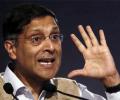
"It's a welcome development, but we also feel it was long overdue... It's a recognition of the actions that the government has undertaken like GST, bankruptcy. We also need to keep all these things in perspective," Chief Economic Adviser Arvind Subramanian said.
A day after Fitch lowered India's local currency outlook to negative, international rating agency Moody's said it was also worried about the reversal of India's fiscal situation due to high oil prices and the lack of policy adjustment by the government. Moody's, however, said it was unlikely to change its investment grade rating to India's sovereign foreign currency rating or the domestic currency rating, which is below investment grade.

India's record current account deficit has been a key reason behind why Standard & Poor's and Fitch Ratings cut their outlooks on the country's sovereign rating to 'negative' last year.

India's economy will do well once vaccination reaches a critical mass as pent up demand, global recovery and easy financial conditions will boost activities, RBI's Monetary Policy Committee (MPC) member Ashima Goyal said on Tuesday.

After navigating the turbulent pandemic waves, the recovering Indian economy is now sailing through unchartered waters of rising coronavirus cases, spiralling commodity prices and spiking inflation though the lighthouse of sustainable growth remains visible. As 2022 begins, a raft of developments, ranging from Budgetary announcements to continuation of stimulus measures to monetary policy, will set the tone for the domestic economy, which is projected to grow more than 9 per cent in the current fiscal ending March 2022. The country's continuing massive vaccination drive and 'precaution' doses starting for select categories of people this month will provide a firewall against any steep spike in coronavirus cases amid the emergence of the Omicron variant.
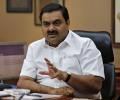
Well-known US activist investor Hindenburg Research has alleged that Adani Group was "engaged in a brazen stock manipulation and accounting fraud", a charge the conglomerate described as malicious, unsubstantiated, one-sided, and having done with malafide intention to ruin its share-sale. Hindenburg, a US-based investment research firm that specialises in activist short-selling, said its two-year investigation reveals that "the Rs 17.8 trillion ($218 billion) Indian conglomerate Adani Group has engaged in a brazen stock manipulation and accounting fraud scheme over the course of decades." The report comes ahead of a Rs 20,000 crore follow-on share sale of Adani Group's flagship Adani Enterprises.

Growth forecast has been lowered owing to tepid growth in the first half of 2017-18, the lingering effects of demonetisation, transitory challenges of GST, and some risks to agriculture stemming from a spotty monsoon.

In April, S&P had lowered India's rating outlook to negative from stable

According to sources, government officials have asked industry bodies and manufacturers to submit key concerns and requirements to begin manufacturing activity.

Rs 50,000-cr loans for 15,000-Mw projects could be heading for restructuring.

S&P Global Ratings on Wednesday said the second wave of COVID infections poses downside risks to India's GDP and heightens the possibility of business disruptions. The second wave brings in uncertainty and a drawn-out COVID outbreak will impede India's recovery, it said.

He said companies with a good strategy, technology, capital, liquidity and a motivated team will emerge as winners after the crisis.
.JPG)
The partially convertible rupee closed at 66.24/25 per dollar after hitting a record low of 66.30, and down 2.9 per cent from its close of 64.30/31 on Monday.

While most economies contracted in the second quarter of 2020, the Chinese economy grew by 3.2 per cent.

ICICI Bank has the largest proportion of SDR loans as a percentage of its total, followed by state-run United Bank of India and Canara Bank.
